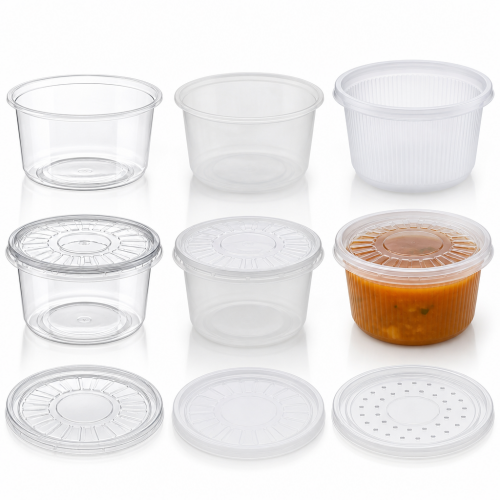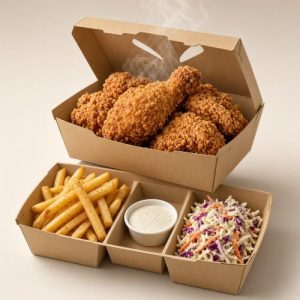
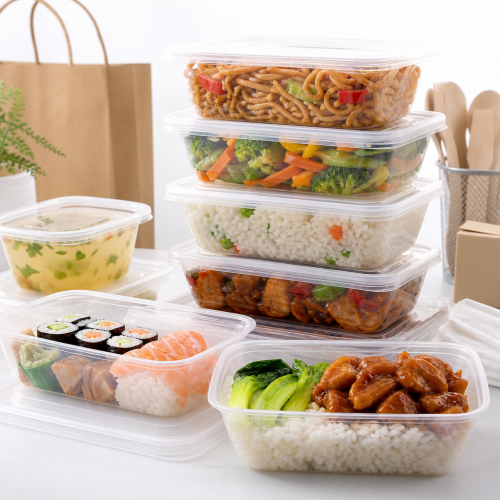
In the context of food delivery services, disposable takeaway containers are predominantly made from food-grade PP (polypropylene). This choice is closely tied to its suitability in terms of heat resistance, safety, and molding process compatibility. As direct packaging that comes into contact with food, material selection must simultaneously satisfy three dimensions: hygiene standards, usage requirements, and cost control.
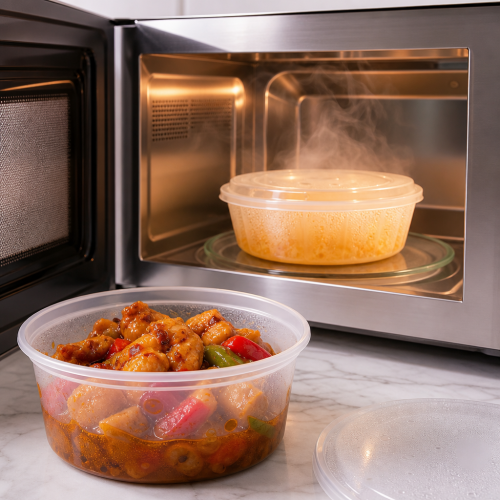
The reason PP has become the mainstream choice stems primarily from its molecular structure properties. This semi-crystalline polymer remains stable below 120°C, accommodating both hot food packaging needs and microwave heating scenarios. Its non-polar characteristic makes it resistant to oil penetration, and food-grade PP certified by the FDA contains no substances with migration risks such as plasticizers. The mature application of thermoforming (blister molding) technology enables PP to be rapidly formed into containers of varying wall thicknesses, and customized production can achieve structural reinforcement by adjusting molds.
The industry maintains a clear grading system for PP containers: products made from pure virgin material feature high transparency, no odor, and superior mechanical strength compared to those mixed with recycled material. Although thickened designs increase costs, they enhance deformation resistance, which is particularly important for soupy takeaway dishes. Differences in lid designs reflect a balancing consideration between leak-proofing and breathability, with some manufacturers optimizing functionality by adding sealing rib grooves.
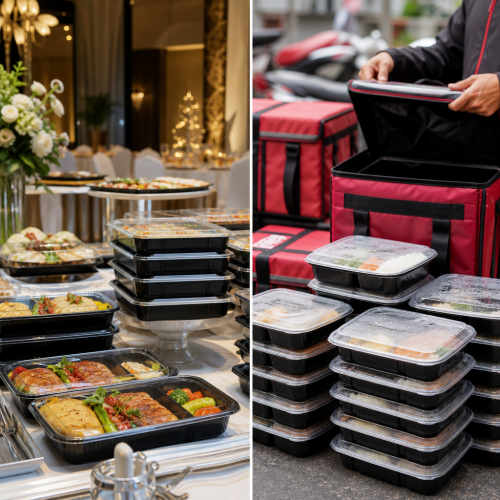
In practical applications, hotel catering pays more attention to the aesthetic appeal and stacking stability of containers, while the takeaway scenario focuses on leak-proof design and cost control. When containers need to contact acidic or high-oil foods, pure PP material ensures better material stability than recycled material or PS (polystyrene). These application differences also prompt manufacturers to offer customized options in parameters such as wall thickness and lid matching.
In practical applications, hotel catering pays more attention to the aesthetic appeal and stacking stability of containers, while the takeaway scenario focuses on leak-proof design and cost control. When containers need to contact acidic or high-oil foods, pure PP material ensures better material stability than recycled material or PS material. These application differences also prompt manufacturers to offer customized options in parameters such as wall thickness and lid matching.