
Why Do Store-Exclusive Skincare Set Boxes Often Use Display Box Designs? Analyzing Packaging Functions from a Display Logic Perspective
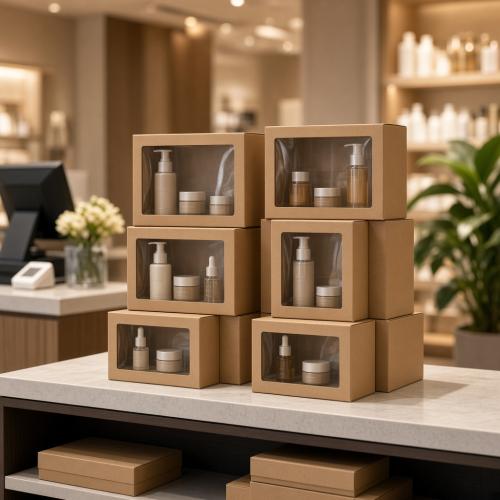
The core difference between store-exclusive skincare set boxes and standard retail packaging lies in the fact that they simultaneously undertake two tasks: “protecting the goods” and “completing in-store display.” Such set boxes are usually not the final sales units sold directly to consumers; instead, they exist as part of the in-store display system. Therefore, their structural design, material selection, and surface treatment all revolve around display efficiency, brand presentation, and durability, rather than simply pursuing the lowest packaging cost or the smallest transport volume.

The key to understanding this is distinguishing between the functional positioning of “sales packaging” and “display packaging.” Sales packaging focuses on consumer appeal on the shelf, information delivery, and protection of individual items; whereas store-exclusive display set boxes need to handle more complex scenarios: they may need to be moved multiple times within the store, restocked repeatedly, withstand lighting exposure and certain humidity environments, while also ensuring that the internal skincare products form a unified and clear brand array visually. Consequently, when designing such packaging, structural rigidity and the flatness of the display surface are typically prioritized over extreme lightweighting. The use of tray-style packaging is essentially intended to allow the set box to form a stable base support on store counters or shelves, avoiding tilting or product slippage due to uneven bottoms; the introduction of waterproof craftsmanship relates to store cleaning, beverage spills, or high-humidity display environments, aiming to maintain the structural strength and appearance integrity of the paper box.
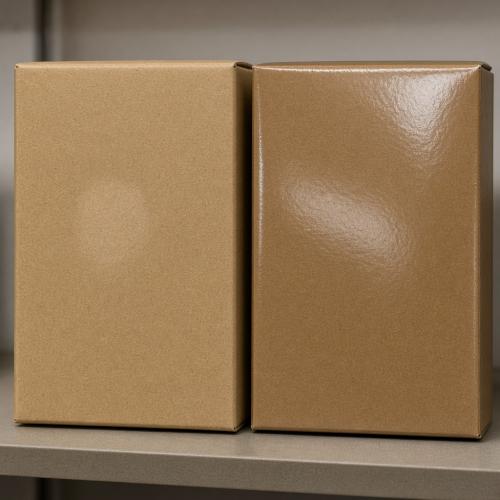
From the perspective of materials and craftsmanship, A+ grade kraft paper is widely adopted in such display boxes because it strikes a good balance between stiffness, burst resistance, and surface flatness. Kraft paper has long fibers, resulting in good compressive strength after box formation, capable of withstanding multi-layer stacking or frequent handling during restocking; meanwhile, after surface treatment with glossy or matte lamination, different visual and tactile effects can be achieved respectively—gloss lamination enhances color saturation and surface abrasion resistance, while matte lamination reduces glare, presents a softer premium feel, and minimizes fingerprint residue. These two surface treatments are understood in the industry as a means of “display surface management,” rather than mere decoration: under store lighting, untreated paper surfaces easily appear worn due to uneven reflection or slight stains, whereas lamination extends the effective display cycle of the box. On-demand color customization and custom manufacturing capabilities reflect the display system’s requirement for brand visual consistency—different store formats and promotional periods may require different color schemes, and the packaging needs to align with the store’s overall visual language.
In practical applications, the design logic of these display boxes varies depending on the store type and display location. For instance, display spots near entrances or main aisles prioritize stacking stability and anti-toppling capability, making the tray structure particularly valuable; whereas spots near experience zones or checkout counters may focus more on the texture of surface treatment and color expression to match the store’s overall tone. The industry generally understands such products as “a component of the in-store display system,” rather than isolated packaging containers—their dimensions, load-bearing capacity, surface effects, and opening methods all need to match store shelf specifications, restocking workflows, and brand guidelines. Therefore, when discussing store-exclusive skincare set boxes, what truly deserves attention is not any single material or process itself, but how these choices collectively serve the goal of “displaying products stably, clearly, and durably in the store environment.”