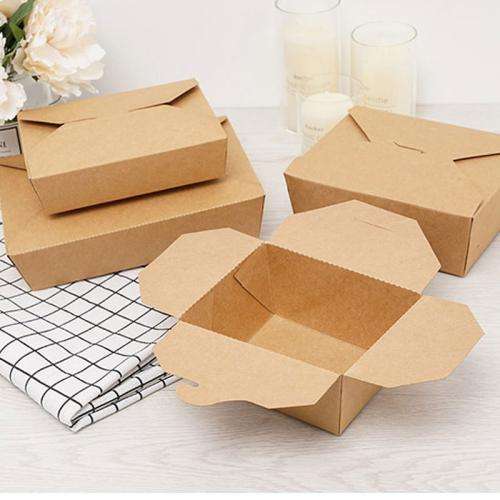
Kraft paper takeout boxes balance food freshness with attractive presentation through their anti-fog transparent lids and eco-friendly, customizable designs. Manufactured using a hot-air process that eliminates the need for chemical adhesives, these boxes are moisture-resistant and durable. Supported by modular molds for mass production, they achieve a daily output of up to 100,000 units. Naturally decomposing within 3–6 months after disposal, they serve as a sustainable alternative to plastic containers.
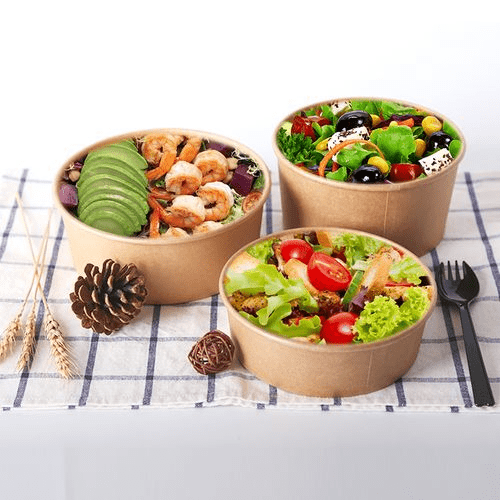
In the realm of takeout packaging, light meals such as sushi and fruit salads impose high demands on containers: they must keep food fresh while preventing condensation from blurring the lid and compromising visual appeal. Kraft paper disposable sushi boxes have become a popular choice for restaurant owners and consumers alike, thanks to features like anti-fog lids and eco-friendly customization. Their core function lies in balancing moisture resistance, stain protection, and display quality through thoughtful material selection and structural design, while also supporting multiple specifications to suit various scenarios.
I. Material & Craftsmanship: Moisture Resistance and Eco-Friendly Properties of Kraft Paper
As the primary material, kraft paper possesses a natural fibrous structure with moderate surface roughness. This allows it to block external moisture to a certain extent while preventing the food from becoming overly steamed or soggy due to excessive sealing. The production utilizes a hot-air process, where high-temperature airflow circulates to bind the paper fibers tightly without chemical adhesives, thereby minimizing the risk of odor residue. The lid typically consists of transparent PET material, secured to the Kraft box body via ultrasonic welding or snap fasteners to form an anti-fog structure. When internal steam condenses on the inner surface of the lid, the anti-fog coating on the PET disperses water droplets, ensuring a clear line of sight.
II. Usage Guidelines: Scenario Adaptation and Key Operational Points
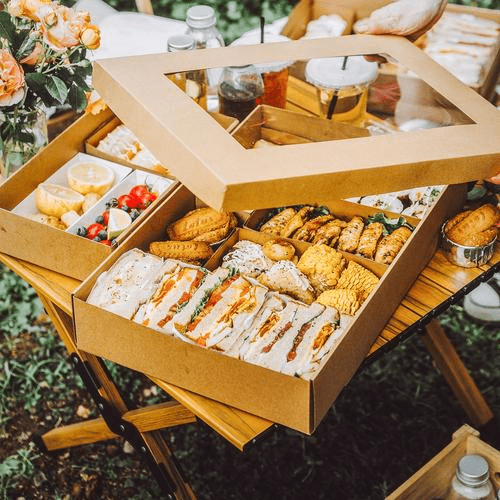
This type of packaging box is suitable for short-distance delivery of cold or room-temperature foods, such as sushi, salads, and fruit salads. Three key points should be noted during use:
First, ensure the food surface is dry before packing to prevent direct contact with moisture that could soften the paper walls.
Second, the lid must be fully snapped shut to prevent food displacement caused by jostling during transport.
Third, if reheating is required (e.g., short microwave heating), the PET lid must be removed beforehand to prevent deformation of the coating due to high temperatures.
Additionally, the Kraft paper material should not come into direct contact with strongly acidic or alkaline foods (such as lemon juice), as this may compromise the fiber structure.
III. Technical Highlights: Balancing Customization and Mass Production
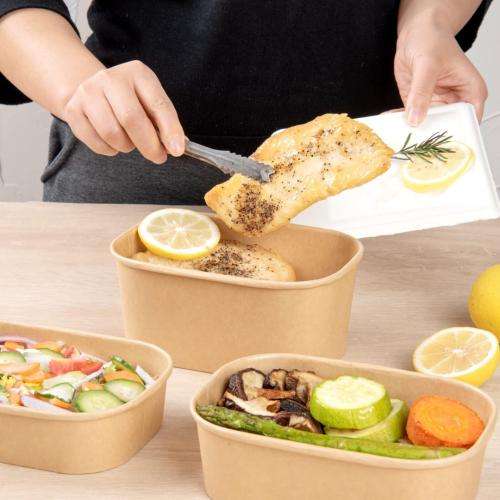
Compared to traditional plastic takeout boxes, the advantage of Kraft paper sushi boxes lies in their customizability. Businesses can select box colors (such as natural Kraft brown or white), print logos or patterns according to brand requirements, and even adjust box height to accommodate different portion sizes. On the production side, modular mold design facilitates rapid switching between multiple specifications—ranging from 200ml small fruit cups to 1000ml large sushi boxes—achieving a daily output of up to 100,000 units. This system meets both small-batch custom orders and large-scale production runs. Furthermore, cardboard carton packaging minimizes damage rates during transit, making it ideal for long-distance distribution scenarios.
IV. Environmental Value: Degradability and Recyclability
The primary component of Kraft paper is wood pulp fiber, classifying it as a biodegradable material. If not heavily contaminated by oil or grease after use, it can be recycled alongside other paper products to be remade into recycled pulp. If contaminated, its decomposition rate in natural environments is significantly faster than that of plastic (approximately 3–6 months vs. hundreds of years for plastic). For businesses prioritizing sustainability, this type of packaging reduces “white pollution” while conveying brand philosophy through customized design, effectively balancing practicality with social value.