Disposable Fried Chicken Burger Boxes
Manufactured from 100% food grade cardboard, these boxes offer a balance of eco-friendliness and cost-efficiency. Their foldable design saves transportation space, At the same time, the fully customized service enhances the brand image and meets the core needs of the food service industry for protection, convenience, and differentiated presentation.
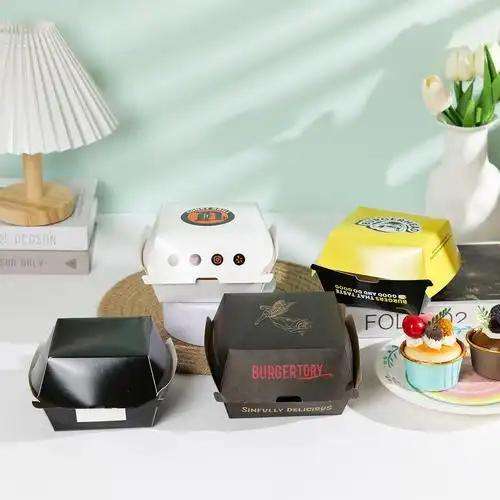
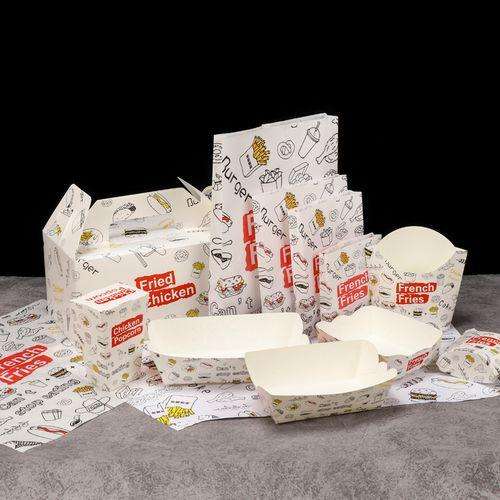
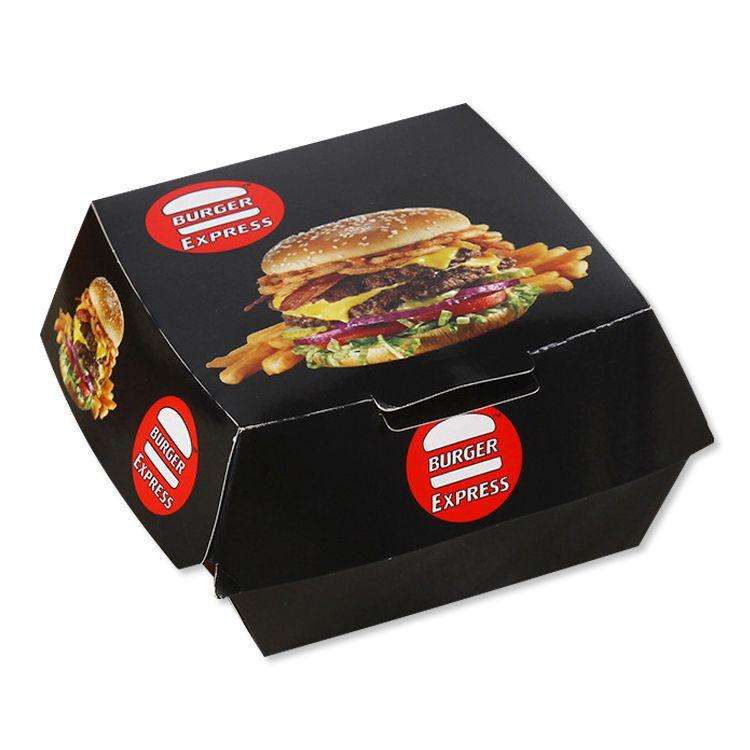
As a high-frequency packaging container in the food delivery sector, fried chicken burger boxes must simultaneously satisfy the core requirements of food protection, portability, and brand display. In terms of material properties, mainstream products utilize 32-micron thick greaseproof cardboard. A composite lamination process forms a dense oil film layer that effectively blocks grease penetration, preventing the box from softening due to oil absorption and causing food spillage. This paper-based material combines environmental sustainability with cost advantages; compared to plastic containers, it is easier to degrade, aligning with the current industry shift toward sustainable packaging.
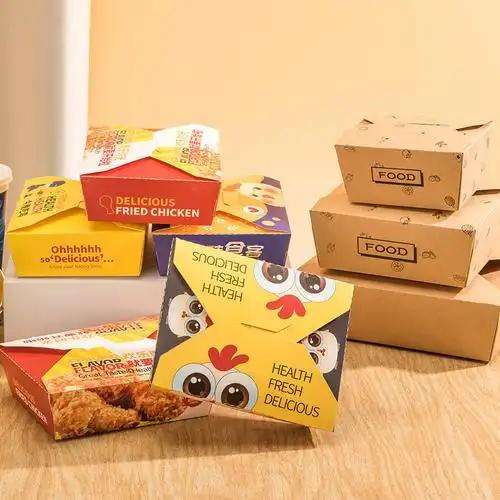
Regarding structural design, modern burger boxes predominantly feature a foldable three-dimensional structure. Pre-scored creases allow for rapid assembly, saving warehouse space while boosting serving efficiency. Taking the common disposable french fry boat as an example, its trapezoidal trough design securely holds long-shaped foods, while the internal anti-grease coating ensures structural integrity even when holding high-temperature fried items. For whole chicken packaging scenarios, some products incorporate thickened cardboard or a double-layer structure to increase sidewall support, preventing deformation caused by the movement of larger food items.
From a production standpoint, scalable manufacturing capability directly impacts supply stability. Current industry standards see daily production capacities reaching over 200,000 units, utilizing automated production lines for full-process control—from raw material cutting and printing to final forming. For businesses with customization needs, manufacturers can provide end-to-end services ranging from structural engineering to graphic design. They support low minimum order quantities (MOQ) and rapid delivery, catering to the personalized packaging requirements of chain restaurants for regional marketing campaigns.