Design Logic of Food Gift Boxes: How Structure and Material Affect Packaging Performance
The key to a roasted chicken gift box lies not in its appearance, but in its hidden structure, materials, and fixation methods. The thickness of the cardboard determines compressive strength, while custom inserts precisely fit the product to effectively prevent damage during transportation. The connection method of the handle also directly affects load-bearing reliability. Understanding these elements allows for the selection of truly suitable solutions for food packaging.
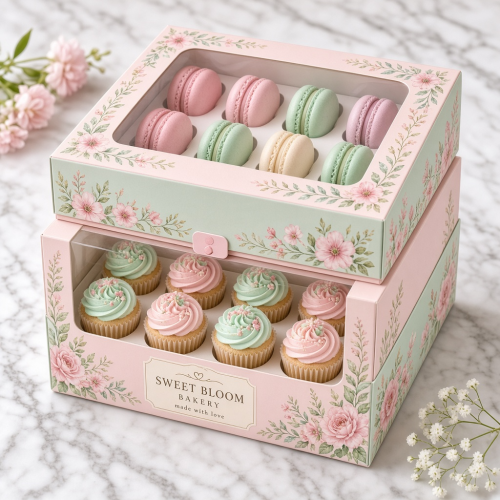
In the field of food gift packaging—especially for specialty cooked products such as roasted chicken, smoked chicken, braised chicken, and air-dried chicken—users often focus first on appearance, color, and handle style, believing these are the main factors determining the packaging’s grade. However, the key factors that actually affect a package’s performance in real-world use are often hidden in structural design, material selection, and internal fixation methods. For example, for two cartons with the same appearance, whether they include inserts, the thickness of the cardboard, and whether custom processing is supported will directly affect the packaging’s protective ability, shipping adaptability, and terminal display effect. Understanding these technical details enables a more accurate judgment of whether a packaging solution is suitable for a specific product.
Working Principle and Core Structure Analysis
The core function of a food gift box is to protect the contents during transportation, display, and gifting, while conveying brand information. Taking a roasted chicken gift box as an example, its structure usually consists of an outer box and an inner tray. The outer box is mostly made of thickened cardboard; the thickness of the cardboard directly affects compressive strength and stiffness, determining whether the packaging easily deforms when stacked or handled. The inner tray fixes the product and cushions vibration. Common materials include molded pulp, plastic trays, or custom foam. Its design must closely match the product shape to prevent displacement or collision during transport. A handheld gift box format requires additional consideration of the connection strength between the handle and the box body to avoid detachment under load. In addition, supporting custom processing means the manufacturer can adjust cardboard weight, insert structure, and printing process according to product weight, size, and shipping environment. This flexibility is especially important for non-standard food packaging.
How Technical Differences Affect Practical Application
Differences between packaging solutions are mainly reflected in material selection, structural design, and customization capability. The difference between thickened cardboard and ordinary cardboard lies in compressive performance and moisture resistance: thicker cardboard usually means higher stiffness and burst resistance, and is less likely to collapse during long-distance transport or in humid environments. Whether an insert is included determines how well the product is fixed inside the box: packaging without inserts relies only on fillers or simple partitions, and the product may shake inside the box, causing oil leakage or shape damage; a custom insert precisely fits the product contour, significantly reducing transport damage rates. The handle connection method of a handheld gift box (such as glued-on, snap-on, or string-through) also affects load-bearing performance: glued handles may debond under heavy load, while string-through or snap structures are usually more reliable. These differences gradually become apparent during bulk procurement and long-term use, especially in scenarios with complex logistics or high terminal display requirements.
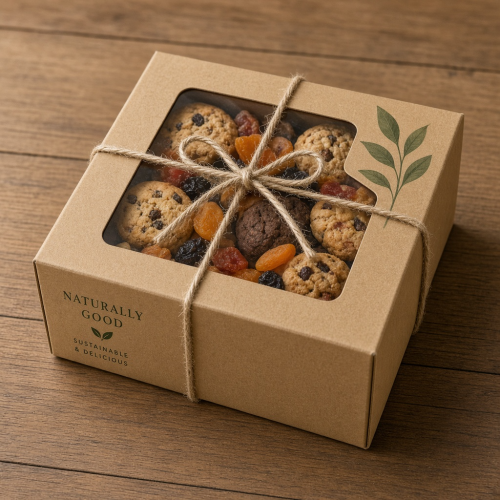
Application Scenarios and Understanding Framework
When selecting a food gift box, a judgment framework should be established based on actual usage scenarios. First, pay attention to the match between product weight and packaging strength: for heavier and oily products such as roasted chicken or braised chicken, priority should be given to confirming cardboard thickness and compressive parameters to avoid box deformation during transport. Second, evaluate the necessity of inserts: if the product has an irregular shape or requires long-distance transport, a custom insert is key to ensuring integrity; if used only for local short-haul delivery or counter display, simple partitions may be sufficient. Third, consider the impact of customization capability on brand presentation: manufacturers that support free design and prototyping can more flexibly adjust size, structure, and printing effects, which suits enterprises with unified brand requirements for packaging. Finally, observe the handle structure: for packaging intended as a direct gift, the firmness and comfort of the handle directly affect user experience. Understanding these dimensions helps practitioners evaluate the suitability of a packaging solution from both functional and economic perspectives, rather than judging solely by appearance.
Application Scenarios and Understanding Framework(repeated section in source, translated once above)
When selecting a food gift box, establish a judgment framework based on actual usage scenarios. First, focus on matching product weight with packaging strength: for heavier, oily products like roasted or braised chicken, prioritize confirming cardboard thickness and compressive parameters to prevent box deformation in transit. Second, assess whether inserts are necessary: for irregularly shaped products or long-haul shipping, custom inserts are critical to integrity; for local short delivery or counter display, simple dividers may suffice. Third, consider how customization affects brand presentation: suppliers offering free design and sampling can flexibly adjust dimensions, structure, and print, fitting brands needing visual consistency. Lastly, check the handle structure: for gift-ready boxes, handle durability and comfort directly shape user experience. Grasping these dimensions lets professionals evaluate packaging on functional and economic grounds, not appearance alone.