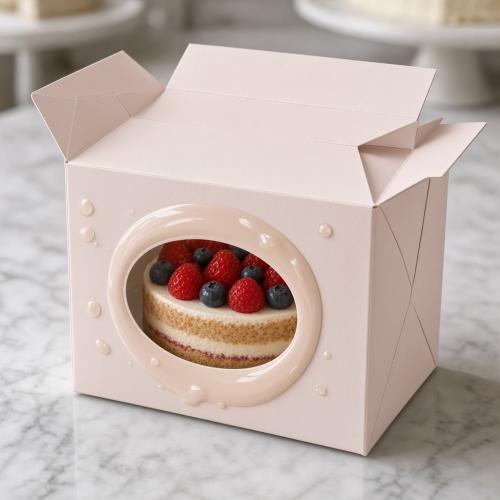
Why Cake Packaging Boxes Emphasize Folding‑Carton and Rigid‑Box Structures? — Understanding the Customization Logic through Foil Stamping, Lamination, and UV Processes
Don’t be fooled by “looks” — the real story of a cake box lies in the paper. Structure, gram weight, and process sequence determine whether it can hold up under cold chain and stacking. Understanding these underlying logics is more practically meaningful than simply comparing visual effects.
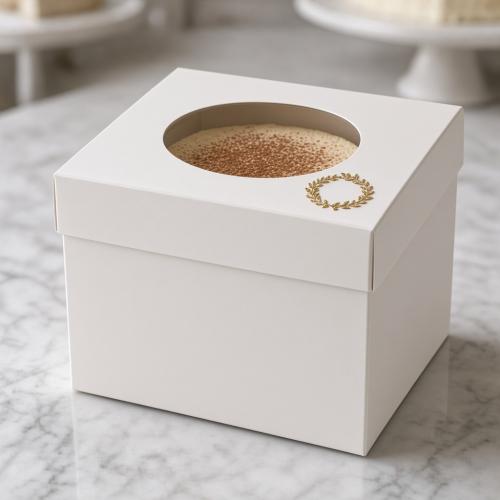
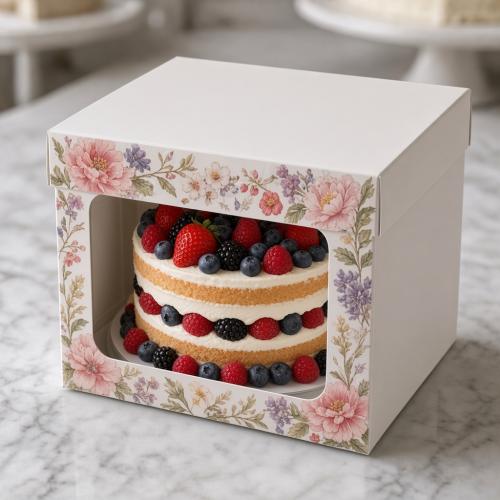
In bakery and gift‑consumption scenarios, cake packaging boxes are often first noticed for their artwork, color matching, and opening style. Consumers see print results and box stiffness; professionals care more about whether the box stays stable during cold storage, stacking, handling, and display. A common misconception is attributing packaging differences to “whether the design looks good,” while ignoring how paper grammage, box structure, surface finishing, and custom size match one another. In fact, a cake box plays three roles at the point of sale: protection, display, and brand recognition. The choice of surface process, the structural difference between folding cartons and rigid boxes, and the sequence of lamination vs. UV printing all affect performance in humid, low‑temperature, or high‑touch environments. Grasping these basics matters more than comparing visuals.
Working Principle and Core Structure
A cake box is a paper/board sales package. The core structure usually consists of body, lid, and inner supports. The difference between a folding carton and a rigid box starts with how the board and face paper are combined: a folding carton is typically made from a single board directly die‑cut and creased — light and suitable for mass production; a rigid box mounts face paper onto a board skeleton, using greyboard or industrial board for stiffness and face paper for appearance. This structural difference decides compression resistance and edge flatness.
For surface processes: foil stamping transfers metallic foil onto the printed surface by heat pressure for local reflective effect; lamination covers the print with a transparent film to protect the ink and improve rub resistance; UV printing applies a UV‑cured coating on specific areas for local gloss or matte texture. These three are not simply stacked — their order depends on artwork layout, paper absorbency, and die‑cutting accuracy. For example, foil after lamination needs control of film‑to‑foil adhesion; foil before lamination must consider how the film dulls the metallic shine. Custom specs mean box size, board thickness, and cutting rules are redesigned per customer, so the structure stage must already account for the cake’s actual size, load path, and stacking layers. Adding a logo and color customization involves print color sequence and spot‑color management, directly affecting artwork reproduction. Nanjing production conditions decide how mounting and die‑cutting precision are controlled; “flawless, zero error” in industry language mostly means shipment inspection standard — in real production you still watch board moisture, ambient humidity, and blade wear for batch consistency.
How Technical Differences Affect Real Use
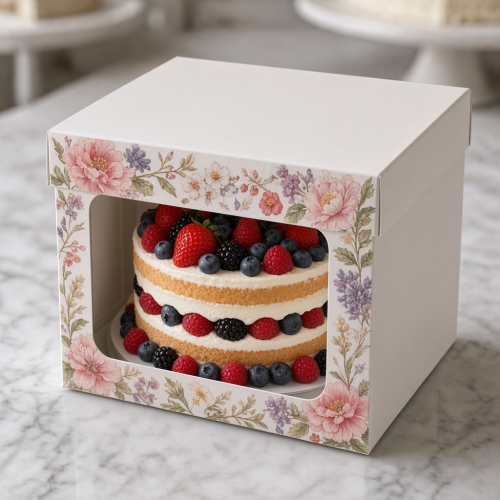
Structural routes differ first in rigidity and edges. Folding cartons are light and easy to open, but under multi‑layer stacking or long transport, single‑board compression is limited and corners may crease or slightly deform. Rigid boxes, backed by a board skeleton, have higher stiffness and cleaner edges — good for display or gifting — but mounting needs tighter environment and labor control, with different lead time and cost structure.
Surface processes change rub resistance and visual stability. Lamination forms a continuous protective layer and reduces handling wear, but film‑to‑board bonding depends on adhesive and temperature; poor control causes bubbles or lifting edges. UV local coating gives gloss contrast, yet coated vs. uncoated areas wear differently, and long friction may show gloss difference. Foil is stable in dry air, but in humid or cold environments — especially cake boxes in refrigeration — condensation can lift foil at edges. Custom size and logo mean every batch is re‑plated; registration and die‑cut consistency rely on machine condition and operator experience, which is why custom packaging needs first‑article confirmation and in‑process sampling.
Application Scenarios and a Framework for Understanding
To read a cake box technically, use a few dimensions:
1. Box structure — folding vs. rigid, board thickness and mounting method decide stacking/handling behavior. Continuous delivery cares about corner stiffness and compression; dine‑in or short delivery can prioritize easy opening.
2. Surface process sequence — foil, lamination, UV order affects adhesion and rub resistance. Cold/humid environments need intact lamination and treated foil edges; high‑touch zones need awareness of UV vs. non‑UV wear.
3. Customization variables — size customization rematches cutting rules and board grain direction; bigger runs demand tighter registration and die‑cut consistency; first article and sampling judge batch stability.
4. Environment — cake boxes sit in low temperature, high humidity, or thermal swing; board moisture and finish weatherability affect flatness and print look. Display indoors and cold‑chain transport are not the same requirement.
Building these dimensions shifts selection from “looks nice” to “structure + process + use condition fit.”