Facial Mask Packaging Boxes — Product Overview
Facial sheet masks are everyday skincare staples. Their packaging boxes are more than protective containers—they carry brand presentation, product information, and user experience. Custom mask packaging involves material selection, structural design, printing processes, and more, balancing practicality and aesthetics to meet the special requirements of the beauty and personal care industry.
1. Materials and Structural Design: Balancing Practicality and Sustainability
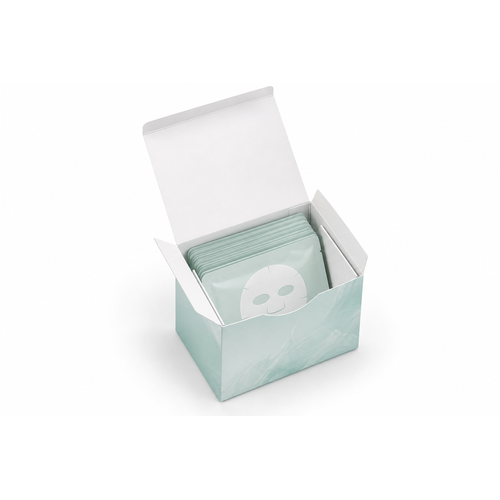
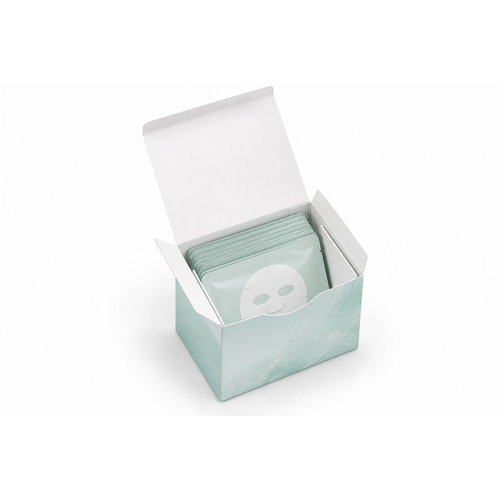
Mask packaging boxes typically use paper or paperboard as base materials—cost-effective, recyclable, and easy to process, aligning with eco-friendly trends. Most structures are foldable for efficient shipping and storage. Inner trays (plastic or paper) hold masks in place and prevent damage from movement during transit. Box weight (e.g., 26.8 g) should stay within a reasonable range—strong enough structurally without adding unnecessary shipping cost.
2. Printing and Surface Finishing: Elevating Visual and Tactile Appeal
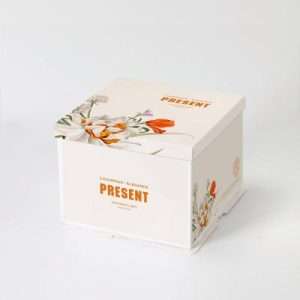
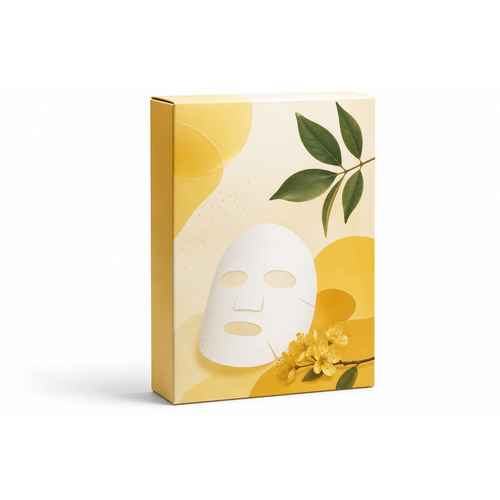
Printing directly shapes how a brand is perceived on shelf. A common finish is four-color printing plus white ink with a matte surface—CMYK reproduces brand colors, white ink boosts saturation, and matte coating delivers a soft-touch feel. Some boxes use die-cutting to create distinctive shapes such as curved openings or logo cutouts for stronger visual identity. Warm tones like yellow often convey natural, gentle brand values.
3. Customization and Functional Extensions: Meeting Diverse Needs
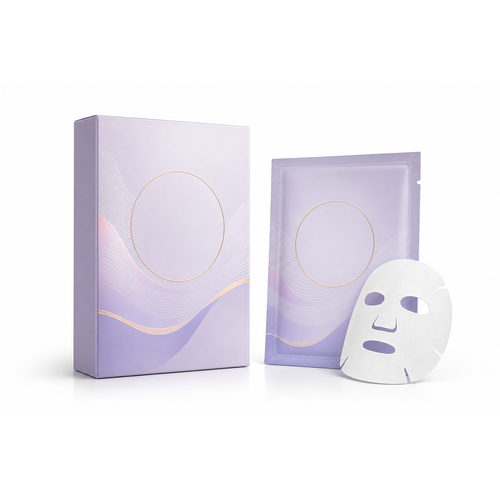
Custom mask packaging supports tailored specs, shapes, and functional add-ons. Dimensions can be adjusted to mask size; moisture-resistant coatings extend shelf life; inner trays fit single-sheet or multi-sheet packs for better space use; foldable structures make storage easier after use. Premium brands may add QR codes or anti-counterfeit marks for traceability and interactive marketing.
4. Production Efficiency and Quality Control: Scale Meets Precision
Daily output can reach 500,000 units, relying on automated equipment such as die-cutters and printing presses. Strict QC is essential—checking color deviation, die-cut burrs, and fold stability—so every box meets retail standards.