
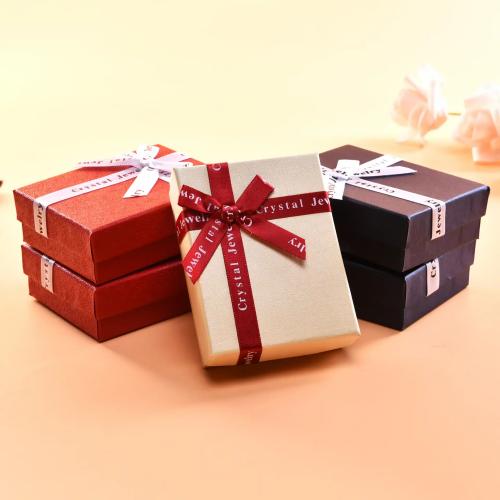
The visual impact of business gift boxes stems from the art of crafting combinations: offset printing precisely reproduces patterns, gravure printing evenly lays down colors, and hot stamping adds a touch of elegance to enhance the texture, while the 350g composite structure and pearl cotton inner tray silently safeguard every opening and closing experience. The true quality lies within the 1-3mm die-cutting tolerance and the delicate balance between UV coating and paper toughness.
In the field of custom business gift boxes, users often focus first on the visual effects and printing precision of the packaging. However, in actual use, the choice of craftsmanship and structural design are the key factors determining the durability and presentation of the packaging. The combination of different printing techniques, the composite structure of the face paper and cardboard, and the application depth of surface treatments like hot stamping collectively form the technical moat of gift packaging.
Working Principle and Core Structure Analysis
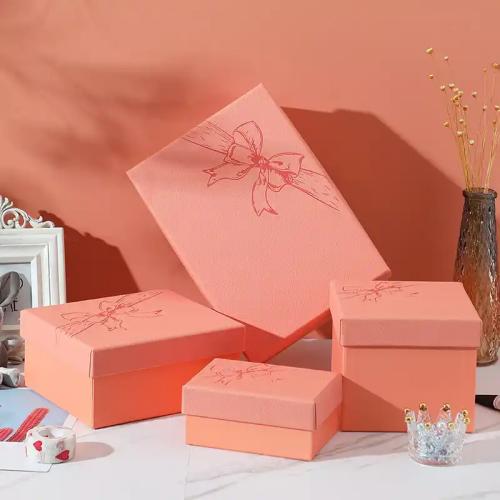
This product adopts a composite structure design of cardboard + face paper, with a 350g thickness providing foundational support. Three traditional printing methods—offset printing, gravure printing, and letterpress printing—are each responsible for different levels of pattern precision: offset printing achieves high-precision image reproduction, gravure printing ensures uniformity in large color blocks, and letterpress printing is used for special texture effects. UV printing, as a curing layer, enhances surface wear resistance, while hot stamping/silver plating processes form a metallic decorative layer through thermal transfer. The pearl cotton inner tray, shaped through die-cutting, provides cushioning protection for the product.
How Technical Differences Affect Practical Applications
Multi-color customization (4+4 colors) allows for more natural color transitions but increases registration difficulty; the 1-3mm error range reflects the level of die-cutting process control; the proportion of hot stamping area directly impacts production costs and delivery cycles; the thickness of the UV coating affects tactile smoothness but may reduce paper toughness. The combination of these technical parameters determines the balance between the visual impact and practical durability of the final product.
Application Scenarios and Understanding Framework
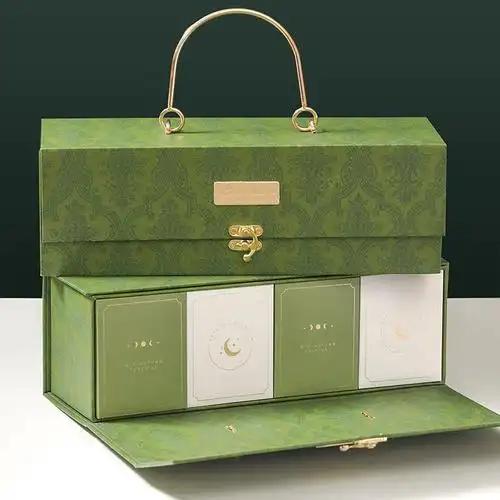
When evaluating business gift boxes, three dimensions should be considered: First, observe the flatness of the bonding between the face paper and cardboard to assess base material quality; second, check whether hot stamping edges exhibit powder scattering to evaluate process maturity; third, test the number of opening and closing cycles to assess the rationality of the hinge structure. Gift boxes intended for frequent use should prioritize UV reinforcement solutions rather than excessive pursuit of decorative processes.
When evaluating business gift boxes, three dimensions should be considered: First, observe the flatness of the bonding between the face paper and cardboard to assess base material quality; second, check whether hot stamping edges exhibit powder scattering to evaluate process maturity; third, test the number of opening and closing cycles to assess the rationality of the hinge structure. Gift boxes intended for frequent use should prioritize UV reinforcement solutions rather than excessive pursuit of decorative processes.